Mace vs nutmeg
Mace and nutmeg are the rare case of two distinct spices from one fruit: nutmeg is the inner seed, mace is the lacy red covering around it.
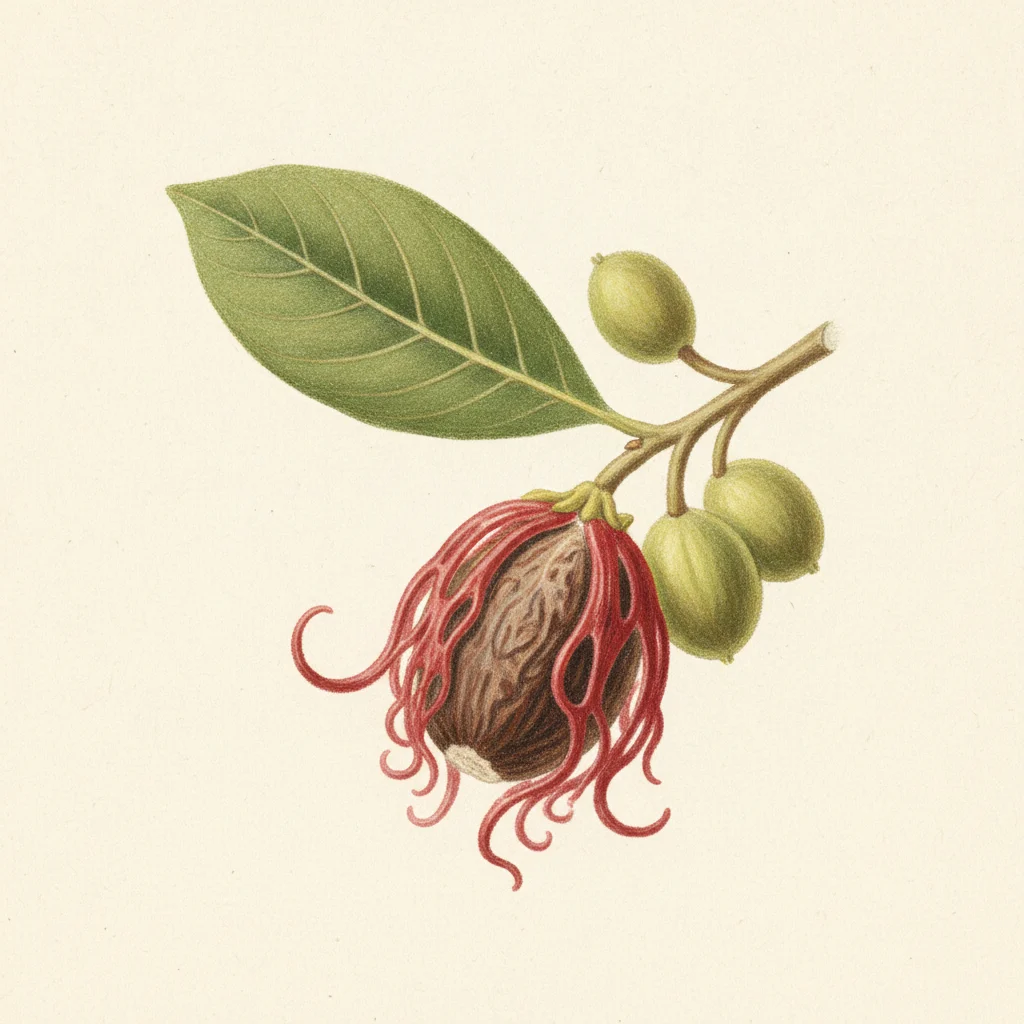
Nutmeg
Warm, sweet, nutty, woody
Nutmeg is the seed of Myristica fragrans, a tropical tree native to the Banda Islands of Indonesia, ground to a warm, sweet, nutty powder. It is one of two spices from the same fruit: nutmeg is the inner seed, and mace is the lacy red covering around it. The flavor is warm and lightly sweet with a woody, almost piney edge, at home in cream sauces, custards, baked goods, and vegetables like spinach and squash. Grated fresh it tastes far livelier than the pre-ground powder. Control of the nutmeg trade once made the tiny Banda Islands some of the most fought-over land on earth.
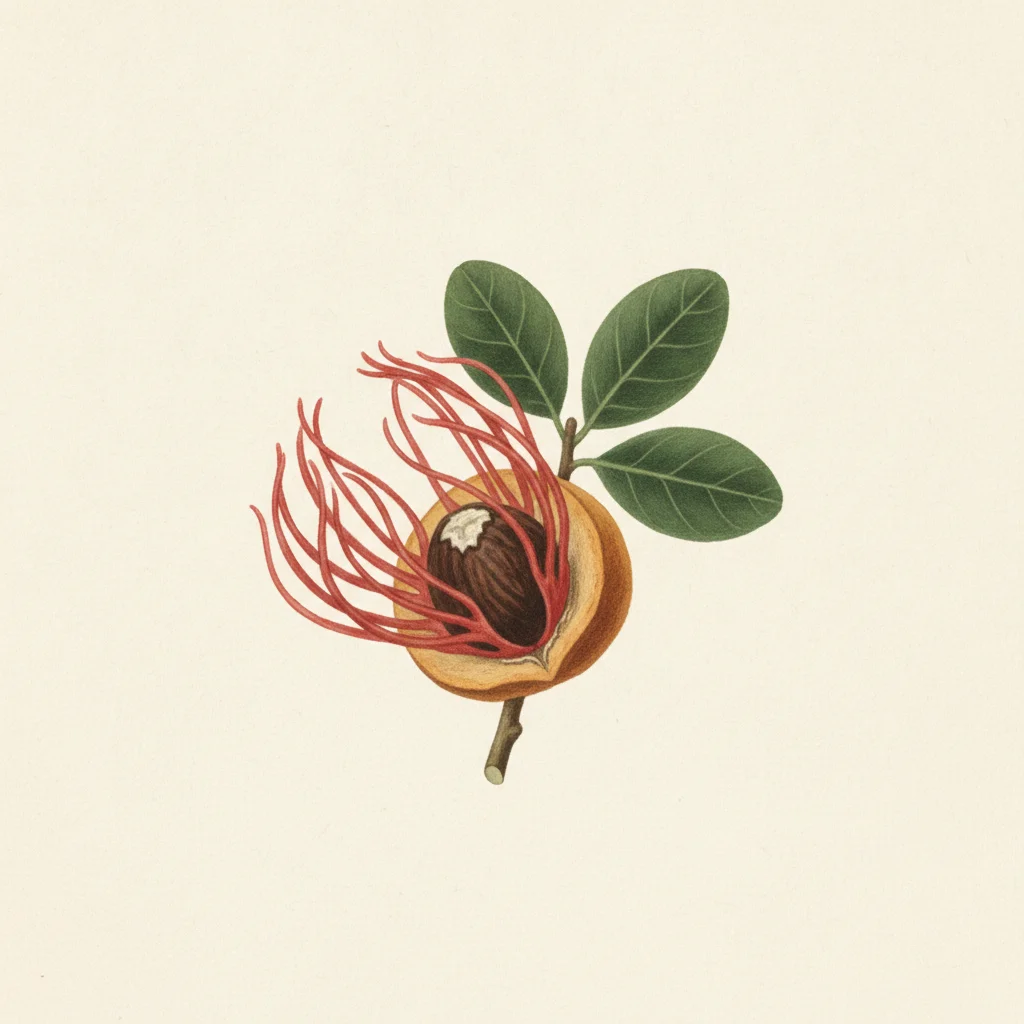
Mace
Warm, sweet, delicate, faintly floral
Mace is the lacy, crimson covering that wraps the nutmeg seed inside the fruit of Myristica fragrans, dried into reddish-orange blades or ground to a powder. It tastes much like nutmeg but lighter, brighter, and more delicate, with a faint floral warmth, and it costs more because each fruit yields only a thin web of it. Mace is prized where nutmeg's flavor is wanted without darkening a pale dish, in cream sauces, fine baking, and spice blends. Whole blades infuse slowly; ground mace is the everyday form. It is, in effect, the wrapping of another spice.
Which to use when
Use nutmeg for its deeper, woodier warmth, grated fresh into cream sauces, custards, and baked goods. Reach for mace when you want that same flavor but lighter and more delicate, or when you do not want to darken a pale dish. They swap roughly one for one, with mace reading a touch more refined.
Common questions
- Can I substitute mace for nutmeg?
- Yes, at about 1 to 1. Mace is a little more delicate, so the result is lighter but recognizably the same flavor.
- Are mace and nutmeg from the same plant?
- Yes. Both come from the fruit of Myristica fragrans. Nutmeg is the seed; mace is the lacy red aril that wraps it.
Stay in the loop
From the Almanac
Updates from Spice Almanac, when there is something worth sharing.