Za'atar vs dukkah
Both are Middle Eastern blends eaten with bread and olive oil, which is why they sometimes get mixed up. One is a tart green herb blend, the other a coarse, nutty crumble.
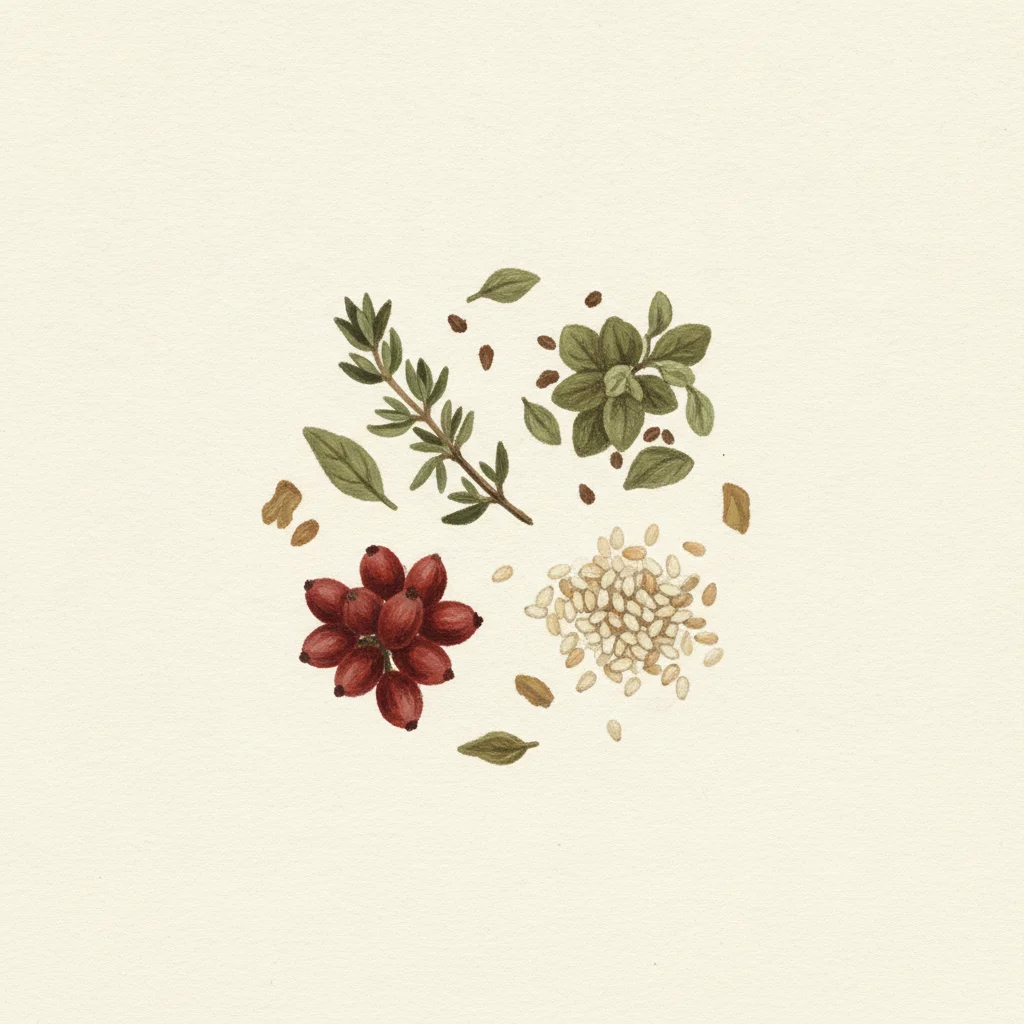
Za'atar
Herbal, tart, nutty, savory
Za'atar is both a wild Levantine herb and the popular blend named after it, which combines that herb (or a mix of thyme and oregano) with tart sumac, toasted sesame seeds, and salt. The result is herbal, tangy, and nutty all at once, one of the defining flavors of Levantine cooking. It is most famous mixed with olive oil and baked onto flatbread, but it also tops hummus, labneh, eggs, and roasted vegetables. Recipes vary by family and region, and the balance of herb, sumac, and sesame is a matter of taste.
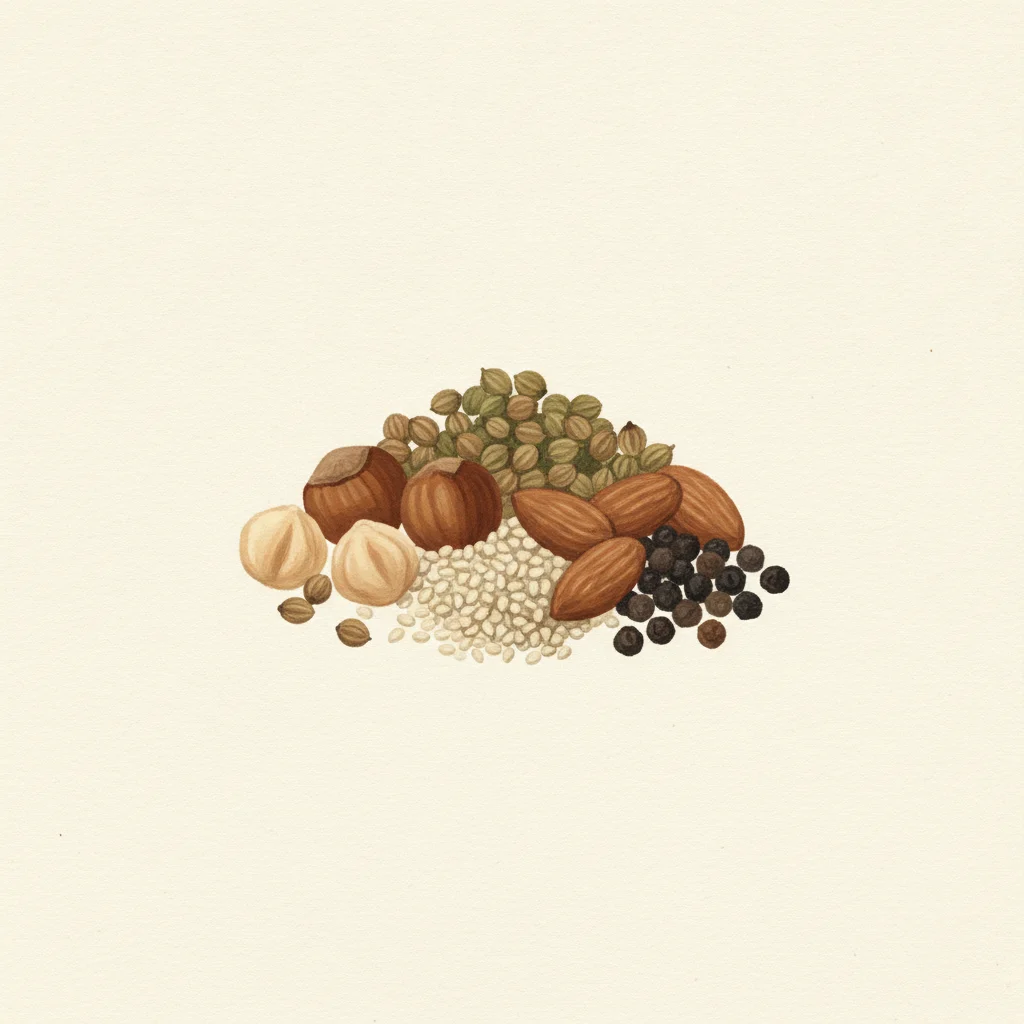
Dukkah
Nutty, toasty, savory, coarse
Dukkah is an Egyptian blend of toasted nuts, seeds, and spices, crushed coarse rather than ground to a powder so it keeps a crunchy texture. A typical mix combines hazelnuts or chickpeas with sesame, coriander, and cumin, plus salt and pepper. It is eaten as a dip, with bread dunked first in olive oil and then in the dukkah, and it is scattered over eggs, roasted vegetables, hummus, and salads for toasty crunch. Every cook has a ratio, but the constant is the contrast of nutty, seedy texture against soft food.
Which to use when
Use za'atar when you want a tart, herbal note, thyme and sumac with sesame, dusted over flatbread, chicken, or eggs. Use dukkah when you want toasty crunch, crushed nuts and seeds for dipping bread in oil or scattering over roasted vegetables. Za'atar is a fine, lemony powder; dukkah is a coarse, nutty mix you can feel between your fingers.
Common questions
- What is the difference between za'atar and dukkah?
- Za'atar is a fine, tart blend of dried herbs, sumac, and sesame. Dukkah is a coarse mix of toasted nuts, seeds, and spices. Za'atar tastes lemony and herbal; dukkah tastes nutty and toasty.
- Are they used the same way?
- Both pair with bread and olive oil, but differently. Za'atar is stirred into oil or dusted over food; dukkah is kept coarse for dipping and sprinkling, so its crunch survives.
- What is in za'atar?
- A base of thyme or wild za'atar herb, sumac for tartness, and toasted sesame seeds. Exact ratios vary by family and region.
Stay in the loop
From the Almanac
Updates from Spice Almanac, when there is something worth sharing.