Ras el hanout vs baharat
Both are warm, aromatic spice blends from the wider Middle East and North Africa, and both change from shop to shop. The split is roughly Moroccan floral complexity against Levantine peppery warmth.
Ras el hanout
Warm, floral, complex, deeply layered
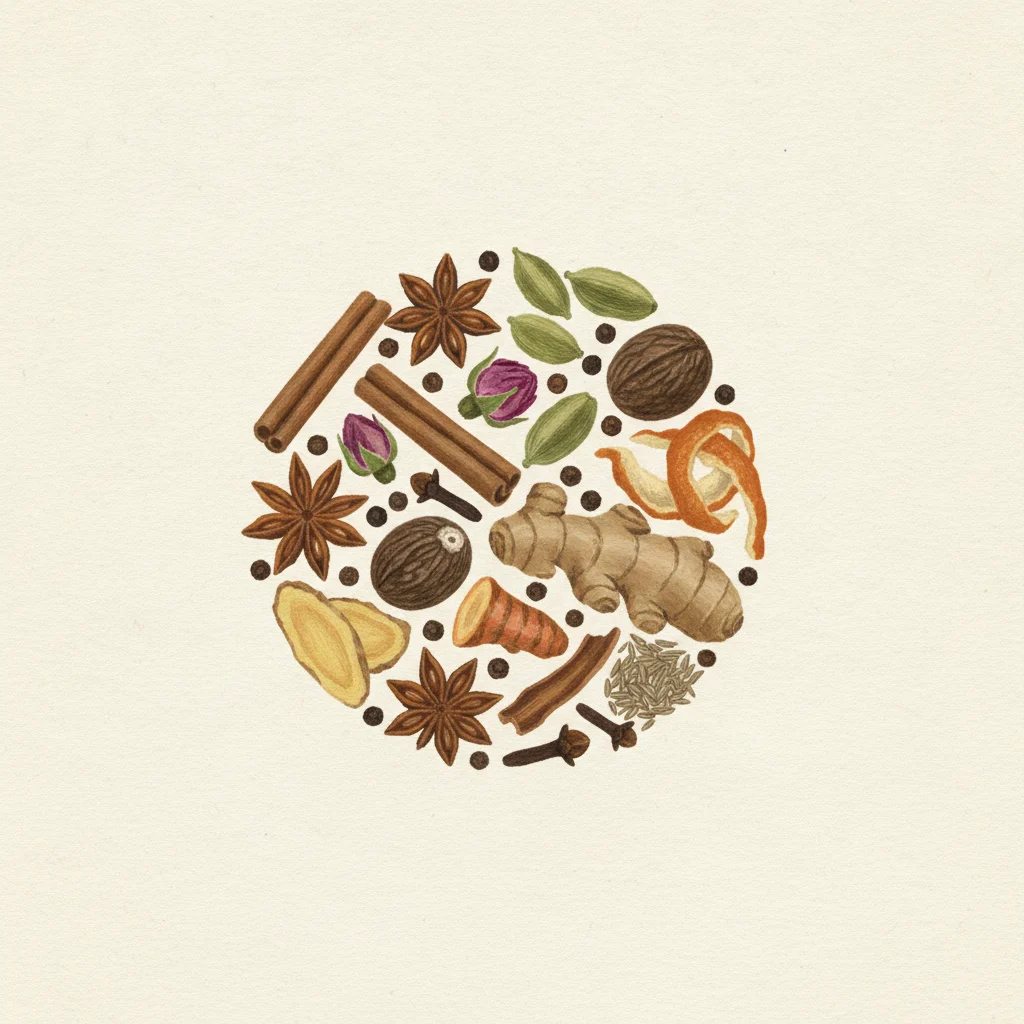
Ras el hanout is a North African spice blend whose name means top of the shop, the idea being that a merchant blends the best spices he has. There is no fixed recipe; a good mix can hold a dozen or more spices, often cumin, coriander, cinnamon, cardamom, clove, ginger, and turmeric, sometimes with floral notes like rose or lavender. The result is warm, complex, and aromatic rather than hot, and it is the backbone of Moroccan tagines, couscous, and grilled meats. Every shop and household guards its own balance.
Baharat
Warm, peppery, sweet, aromatic
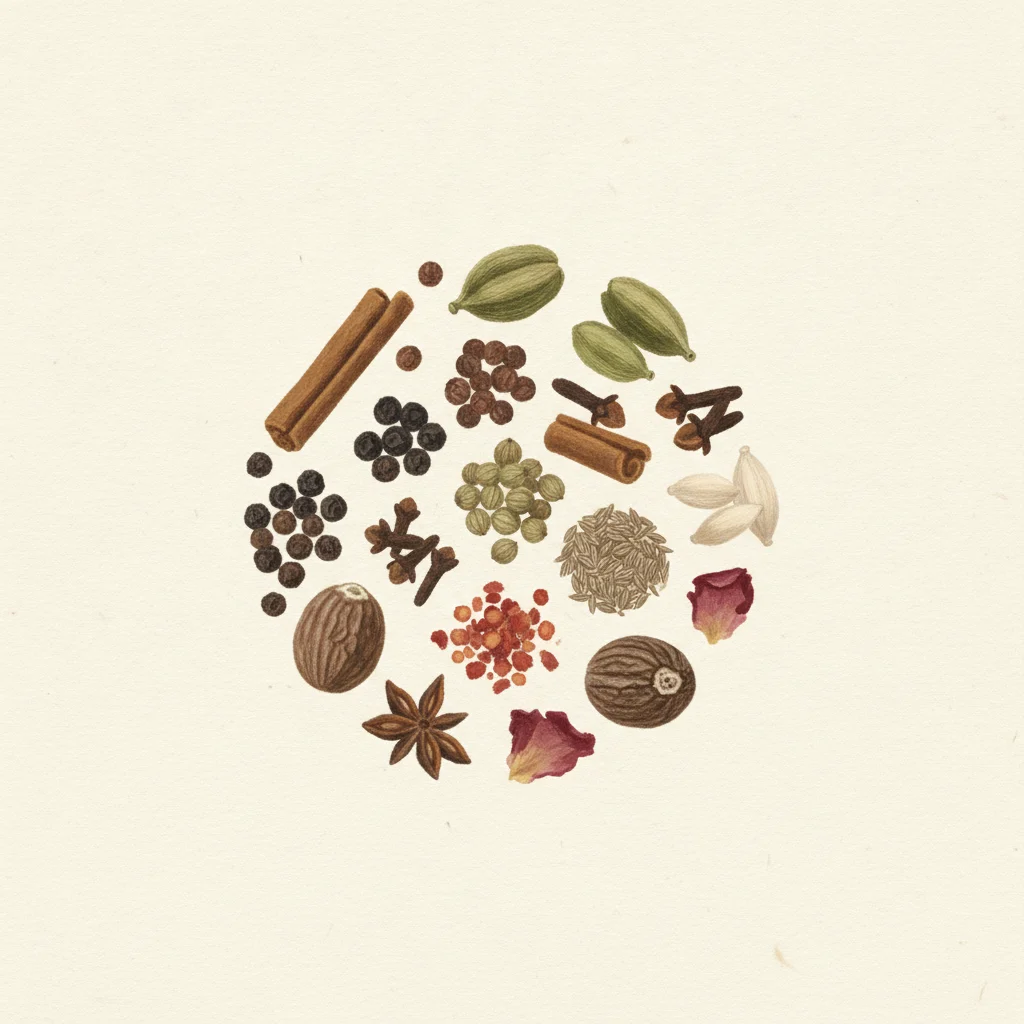
Baharat, which simply means spices in Arabic, is the all-purpose warm blend of the Middle East, varying from country to country. A typical mix leans on black pepper, cumin, coriander, cinnamon, clove, cardamom, paprika, and nutmeg, ground into a fragrant brown powder that is warm and peppery with a sweet edge. It seasons grilled and braised meats, rice, soups, and stuffed vegetables across the Levant and the Gulf. Some regional versions add dried mint, dried lime, or extra chile, so baharat is less a single recipe than a family of related blends.
Which to use when
Reach for ras el hanout, the Moroccan blend, when you want floral, layered complexity, rose and warm spice, in tagines, couscous, and roast squash. Reach for baharat, common across the Levant and Gulf, when you want a rounder, peppery warmth for grilled meats, rice, and stews. Ras el hanout is the more perfumed and ornate; baharat is the warmer everyday workhorse.
Common questions
- What is the difference between ras el hanout and baharat?
- Ras el hanout is a Moroccan blend known for floral, complex layering, often with rosebuds. Baharat is a Levantine and Gulf blend that leans warm and peppery. Both vary by maker, but ras el hanout is more perfumed and baharat more plainly warm.
- Can I substitute one for the other?
- In a pinch, yes, since both are warm aromatic blends. The dish will lose ras el hanout's floral note or gain baharat's extra pepper, but the warm base carries over.
- What does ras el hanout mean?
- It means top of the shop in Arabic, the blend of a merchant's finest spices, which is why no two versions are quite the same.
Stay in the loop
From the Almanac
Updates from Spice Almanac, when there is something worth sharing.