Oregano vs marjoram
Marjoram and oregano are close botanical cousins that look alike and are often confused, but one is bold and the other is gentle.
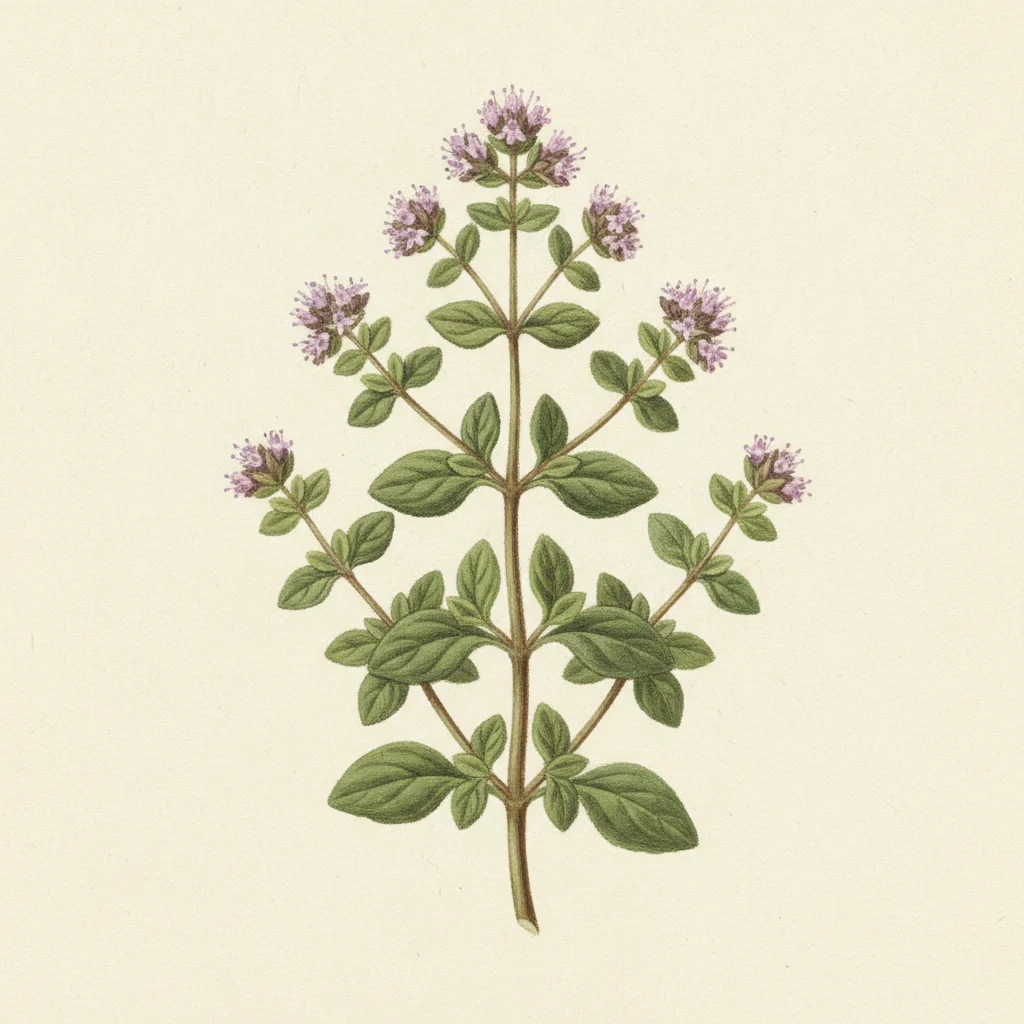
Oregano
Herbal, peppery, slightly bitter, aromatic
Oregano is the dried or fresh leaf of Origanum vulgare, a hardy Mediterranean member of the mint family whose name comes from Greek for joy of the mountain. The flavor is herbal and peppery with a slightly bitter, aromatic warmth, and it is one of the rare herbs that tastes stronger dried than fresh. It is a defining note of Italian and Greek cooking, scattered on pizza, tomato sauces, and grilled lamb. Mexican oregano is a different plant with a more citrus, resinous edge, so the two are not always interchangeable despite the shared name.

Marjoram
Sweet, mild, floral, gently warm
Marjoram is the leaf of Origanum majorana, a tender Mediterranean herb closely related to oregano but milder, sweeter, and more floral. Where oregano is bold and peppery, marjoram is delicate and almost sweet, with a gentle warmth that fades if cooked too long, so it is usually added near the end. It suits chicken, eggs, tomatoes, beans, and lamb, and it is a quiet member of herbes de Provence and some za'atar-style blends. Dried marjoram holds its flavor well. It is often confused with oregano, but the two are not quite the same plant.
Which to use when
Use oregano when you want a bold, peppery, pizza-and-tomato punch that holds up to cooking. Use marjoram for a sweeter, softer, more floral note added near the end. If you swap marjoram for oregano use a little less time and expect more delicacy; the other way around, expect more punch.
Common questions
- Is marjoram just mild oregano?
- Close. They are related species. Marjoram is sweeter, milder, and more floral; oregano is bolder and more peppery.
- Can I substitute one for the other?
- Yes, roughly one for one. Use a bit less oregano in place of marjoram since it is stronger, and add marjoram later since it is more delicate.
Stay in the loop
From the Almanac
Updates from Spice Almanac, when there is something worth sharing.