Berbere vs ras el hanout
Both are complex African spice blends with long ingredient lists, but they pull in opposite directions on heat. Berbere is built on chile fire; ras el hanout is warm and floral, with little or none.
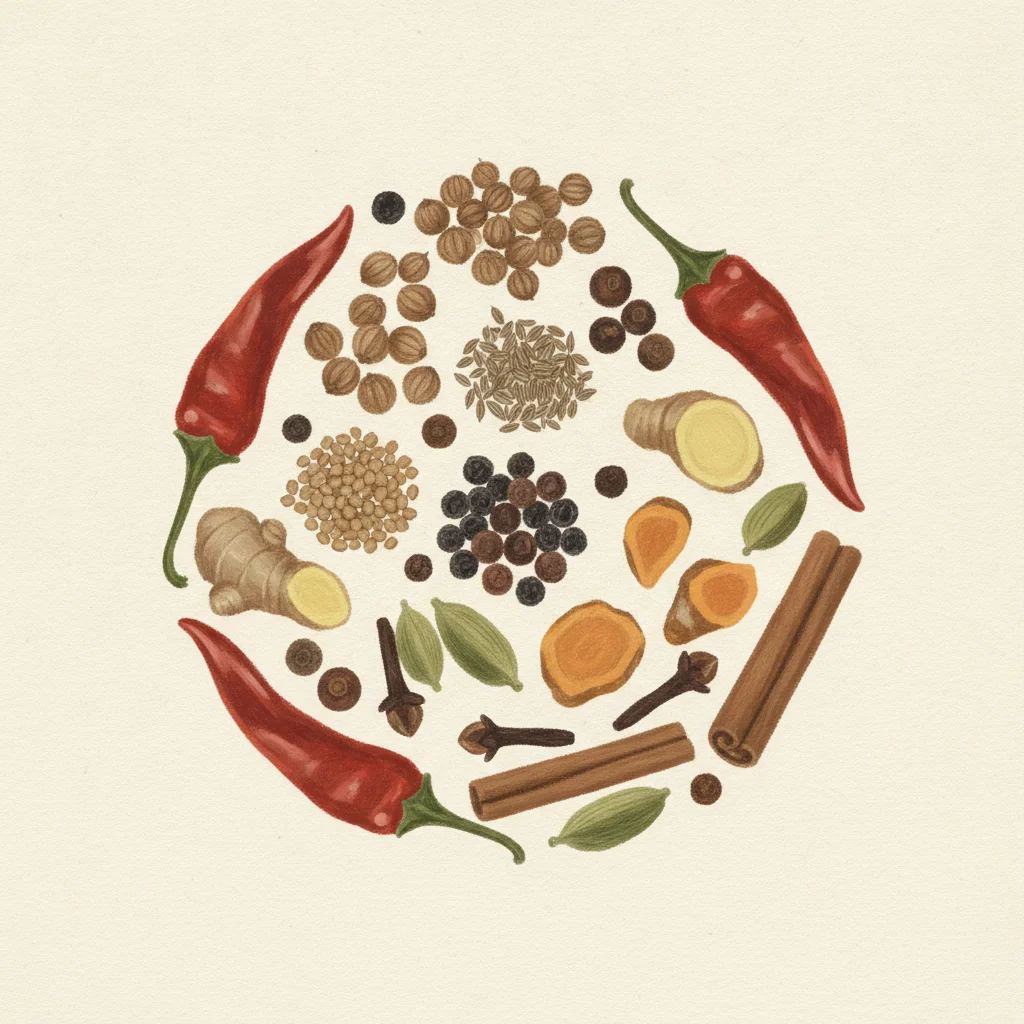
Berbere
Hot, smoky, warm, deeply spiced
Berbere is the fiery, deeply aromatic spice blend at the heart of Ethiopian and Eritrean cooking. Built on dried chiles for heat, it layers in fenugreek, coriander, cardamom, clove, cinnamon, ginger, and allspice for warmth and complexity, ground into a brick-red powder. It is both the seasoning and the chile heat in dishes like doro wat, the national chicken stew, and it flavors lentils, beans, and meats. The fenugreek note is part of what makes it distinct. Recipes vary by region and household, and the best is freshly toasted and ground.
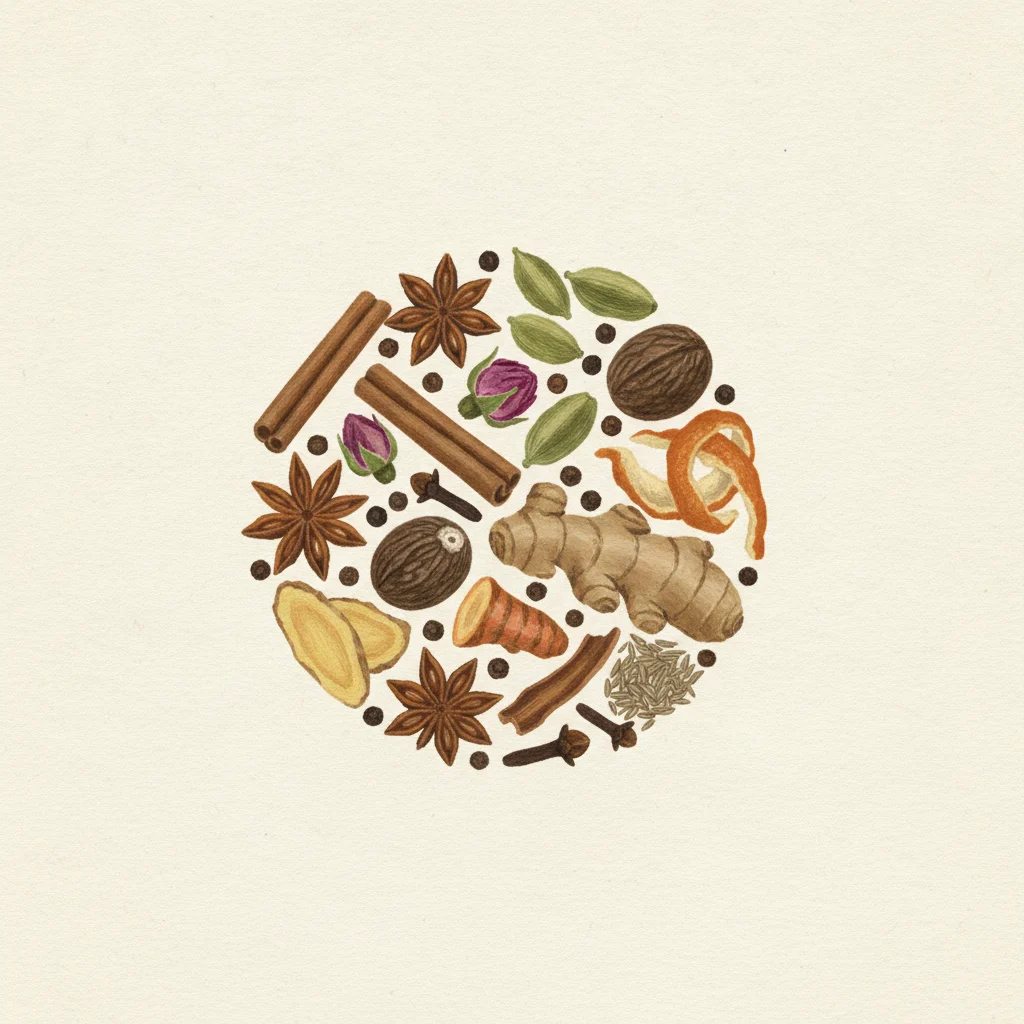
Ras el hanout
Warm, floral, complex, deeply layered
Ras el hanout is a North African spice blend whose name means top of the shop, the idea being that a merchant blends the best spices he has. There is no fixed recipe; a good mix can hold a dozen or more spices, often cumin, coriander, cinnamon, cardamom, clove, ginger, and turmeric, sometimes with floral notes like rose or lavender. The result is warm, complex, and aromatic rather than hot, and it is the backbone of Moroccan tagines, couscous, and grilled meats. Every shop and household guards its own balance.
Which to use when
Use berbere for Ethiopian cooking, where its hot, smoky, fenugreek-edged fire is the backbone of stews like doro wat. Use ras el hanout for Moroccan dishes, where its warm, floral, layered complexity, often with rosebuds, perfumes tagines and couscous without the heat. Berbere brings the fire; ras el hanout brings the perfume. They are not swaps.
Common questions
- What is the difference between berbere and ras el hanout?
- Berbere is an Ethiopian blend built on chile heat, smoky and warm with a signature fenugreek note. Ras el hanout is a Moroccan blend that is warm, floral, and complex, usually with little or no chile. One is hot, the other perfumed.
- Can I substitute one for the other?
- Not cleanly, because the heat is so different. Ras el hanout in place of berbere will miss the fire; berbere in place of ras el hanout will add heat and lose the floral notes.
- Which is spicier?
- Berbere, by a wide margin. It is a chile-forward blend. Ras el hanout is aromatic rather than hot.
Stay in the loop
From the Almanac
Updates from Spice Almanac, when there is something worth sharing.