Baharat vs garam masala
Both are warm, sweet, aromatic spice blends built on overlapping spices like cinnamon, clove, and cumin, which is why they taste like cousins. The split is Middle Eastern against Indian, and a little more pepper against a little more depth.
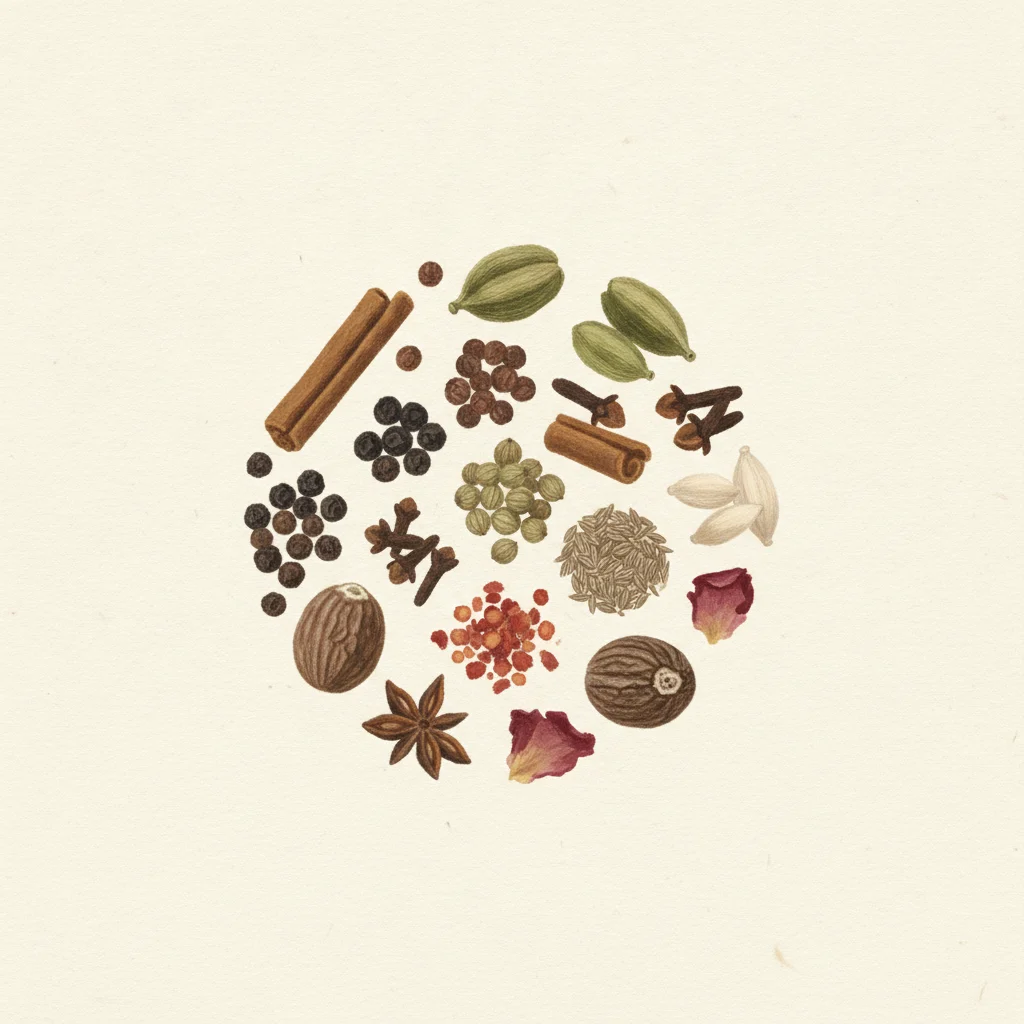
Baharat
Warm, peppery, sweet, aromatic
Baharat, which simply means spices in Arabic, is the all-purpose warm blend of the Middle East, varying from country to country. A typical mix leans on black pepper, cumin, coriander, cinnamon, clove, cardamom, paprika, and nutmeg, ground into a fragrant brown powder that is warm and peppery with a sweet edge. It seasons grilled and braised meats, rice, soups, and stuffed vegetables across the Levant and the Gulf. Some regional versions add dried mint, dried lime, or extra chile, so baharat is less a single recipe than a family of related blends.
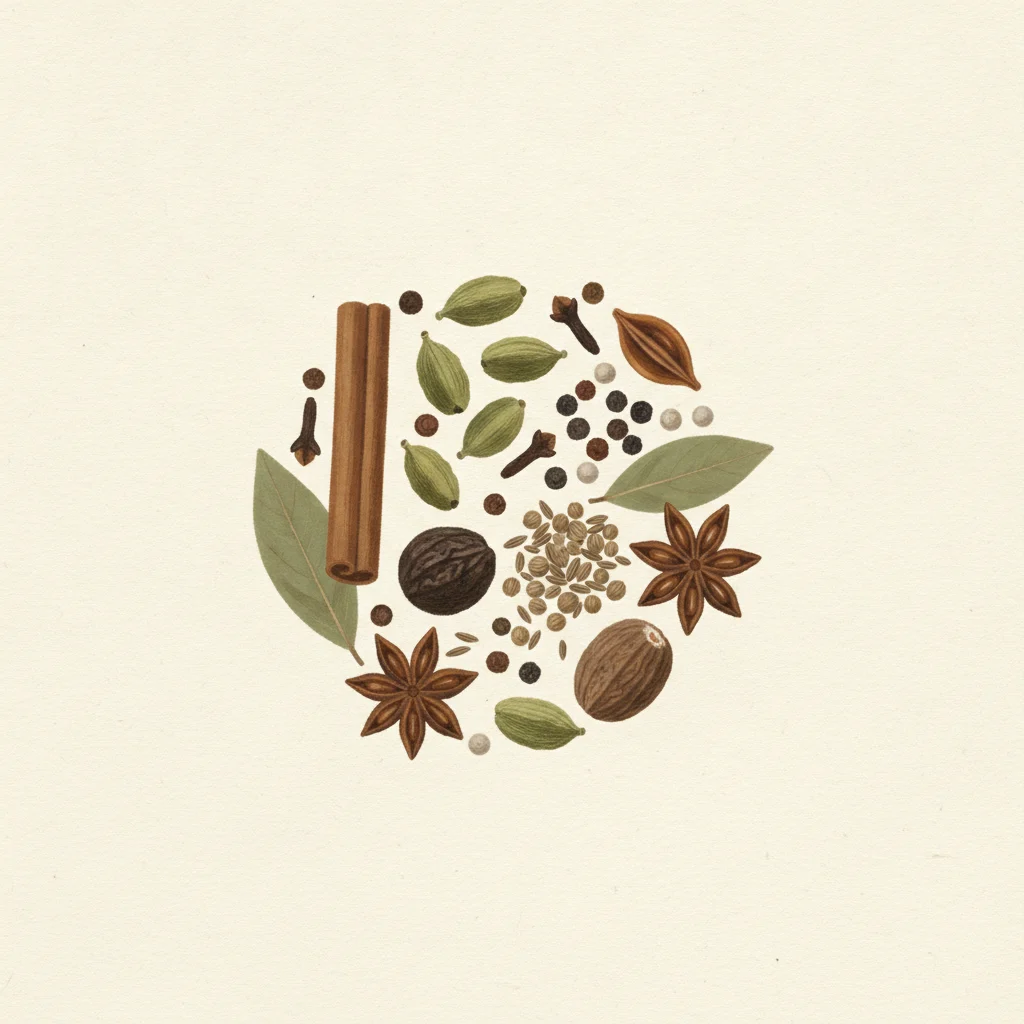
Garam masala
Warm, sweet, aromatic, deeply layered
Garam masala is a warm, aromatic blend of ground spices from the Indian subcontinent, where the name means warming spice mix. There is no single recipe: it varies by region, household, and cook, but it usually leans on warm spices such as cumin, coriander, cardamom, cinnamon or cassia, cloves, and black pepper, toasted and ground together. The blend tastes warm and sweet with a deep, layered aroma rather than heat, since the warmth refers to its effect in traditional cooking rather than to chile. It is added to curries, braised meats, and lentils, often near the end so its fragrance carries through.
Which to use when
Use baharat in Middle Eastern cooking, where its warm, peppery sweetness seasons grilled meats, rice, and stews. Use garam masala in Indian dishes, often stirred in near the end for a fresh hit of warm, layered aroma over curries and lentils. They overlap enough to swap in a pinch, with baharat reading more peppery and garam masala more deeply spiced.
Common questions
- What is the difference between baharat and garam masala?
- Both are warm aromatic blends with shared spices. Baharat, from the Middle East, leans peppery and is built into the dish. Garam masala, from India, is more deeply layered and often added near the end. The word baharat simply means spices in Arabic.
- Can I substitute garam masala for baharat?
- Yes, in a pinch, since they share a warm, sweet base. Garam masala can read a touch sweeter and earthier, so a little extra black pepper brings it closer to baharat.
- Does garam masala have chile heat?
- Usually not. The garam means warm in the sense of warming spices like cinnamon and clove, not chile heat, which is why many blends have no chile at all.
Stay in the loop
From the Almanac
Updates from Spice Almanac, when there is something worth sharing.