Mustard vs horseradish
Both deliver a sharp heat that hits the nose rather than the tongue, and both come from the same plant family. One is a tiny seed, the other a knobbly root.
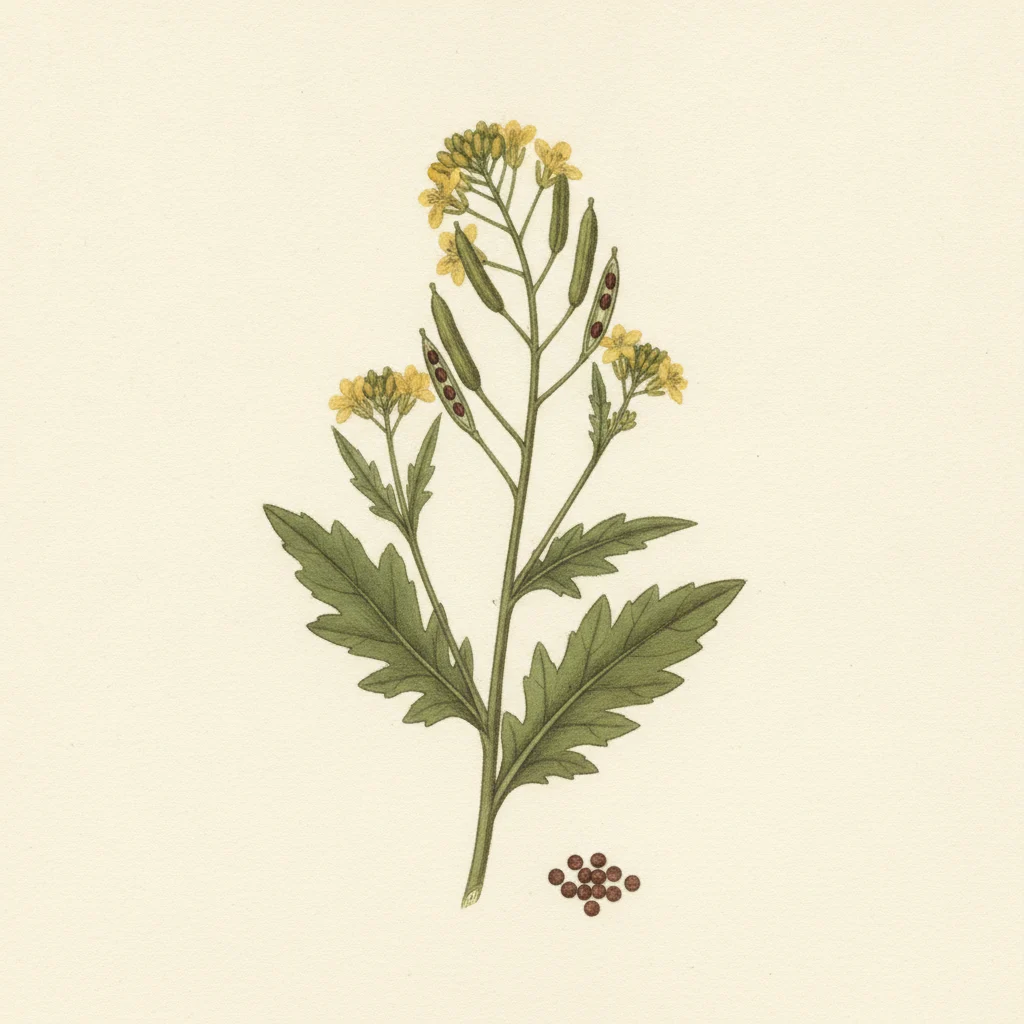
Mustard seed
Pungent, sharp, nose-clearing heat
Mustard seed comes from several plants in the cabbage family, sold as yellow, brown, or black seeds of rising heat. On their own the seeds are nearly flavorless; the sharp, nose-clearing pungency only develops when the crushed seed meets liquid and an enzyme reaction kicks in. That quirk is why prepared mustard is made with cold liquid and why hot cooking mellows the bite. Whole seeds are fried in oil for Indian tempering, pickling, and braised cabbage, while ground mustard sharpens dressings, sauces, and rubs across European and South Asian cooking.
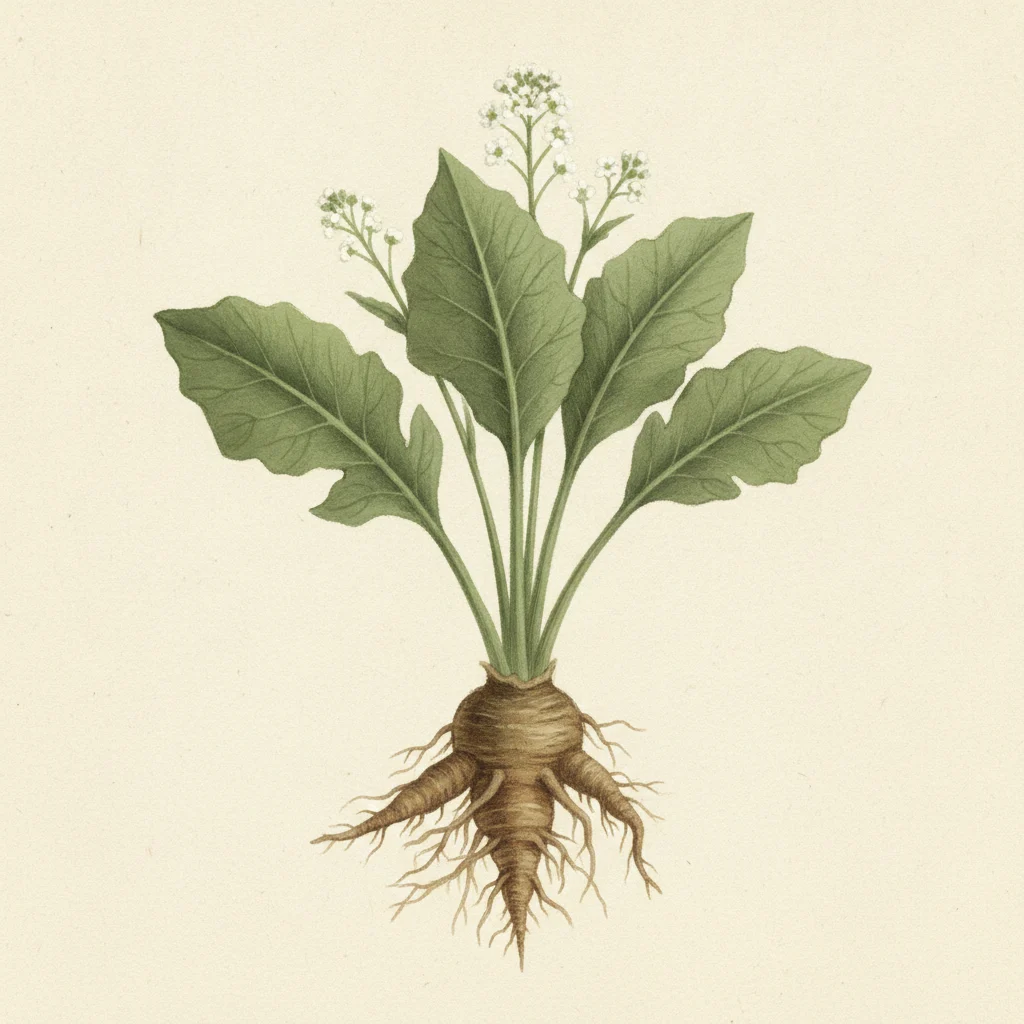
Horseradish
Sharp, hot, nasal, pungent
Horseradish is the pungent root of Armoracia rusticana, a hardy plant in the cabbage family, with a sharp, nasal heat that hits the sinuses rather than the tongue. Like mustard, its bite only develops when the root is grated and its cells are broken, releasing the volatile compounds, and that heat fades quickly unless fixed with vinegar. It is the classic accompaniment to roast beef and an ingredient in cocktail sauce and many European dishes. Most jarred wasabi is actually dyed horseradish, since true wasabi is rare and costly. Fresh-grated horseradish is far fiercer than the jarred kind.
Which to use when
Use mustard, as seed or paste, when you want a sharp tang that can be mellow or fierce, in dressings, sausages, and pickles. Use horseradish, the grated root, when you want a clean, fiery, nose-clearing punch, with beef, smoked fish, and cream sauces. Both bite the nose more than the tongue. Mustard is the more versatile seasoning; horseradish is a pure hit of heat.
Common questions
- Are mustard and horseradish related?
- Yes. Both belong to the same family and share the compound that gives a sharp heat felt in the nose rather than a tongue-burning one. Mustard comes from seeds, horseradish from a root.
- Why do they both hit the nose?
- Both release a volatile compound when crushed or grated that rises into the nose. In mustard the heat appears only once the seed is crushed and mixed with liquid; in horseradish, once the root is grated.
- Can I substitute one for the other?
- For raw heat, horseradish can stand in for hot mustard and the reverse, knowing the flavors differ. Mustard is tangier and more rounded; horseradish is cleaner and fiercer.
Stay in the loop
From the Almanac
Updates from Spice Almanac, when there is something worth sharing.