Mitmita vs berbere
Both are red Ethiopian chile blends, and both sit in the same spice cupboard, but they do different jobs. Berbere is cooked into the dish. Mitmita is the hotter, simpler powder that finishes it.

Mitmita
Fiery, warm, citrusy, intense
Mitmita is the fiery Ethiopian spice blend, hotter than the better-known berbere, made by grinding small, intensely hot bird's eye chiles with a few warm spices such as cardamom, clove, and salt. The result is a bright orange-red powder that is more about heat than complexity. It seasons kitfo, Ethiopia's spiced raw beef dish, and is offered as a dipping spice and a fiery seasoning for meats and lentils. Where berbere is the deep, layered everyday blend, mitmita is the sharp, hot accent. A little brings serious heat to a plate.
Berbere
Hot, smoky, warm, deeply spiced
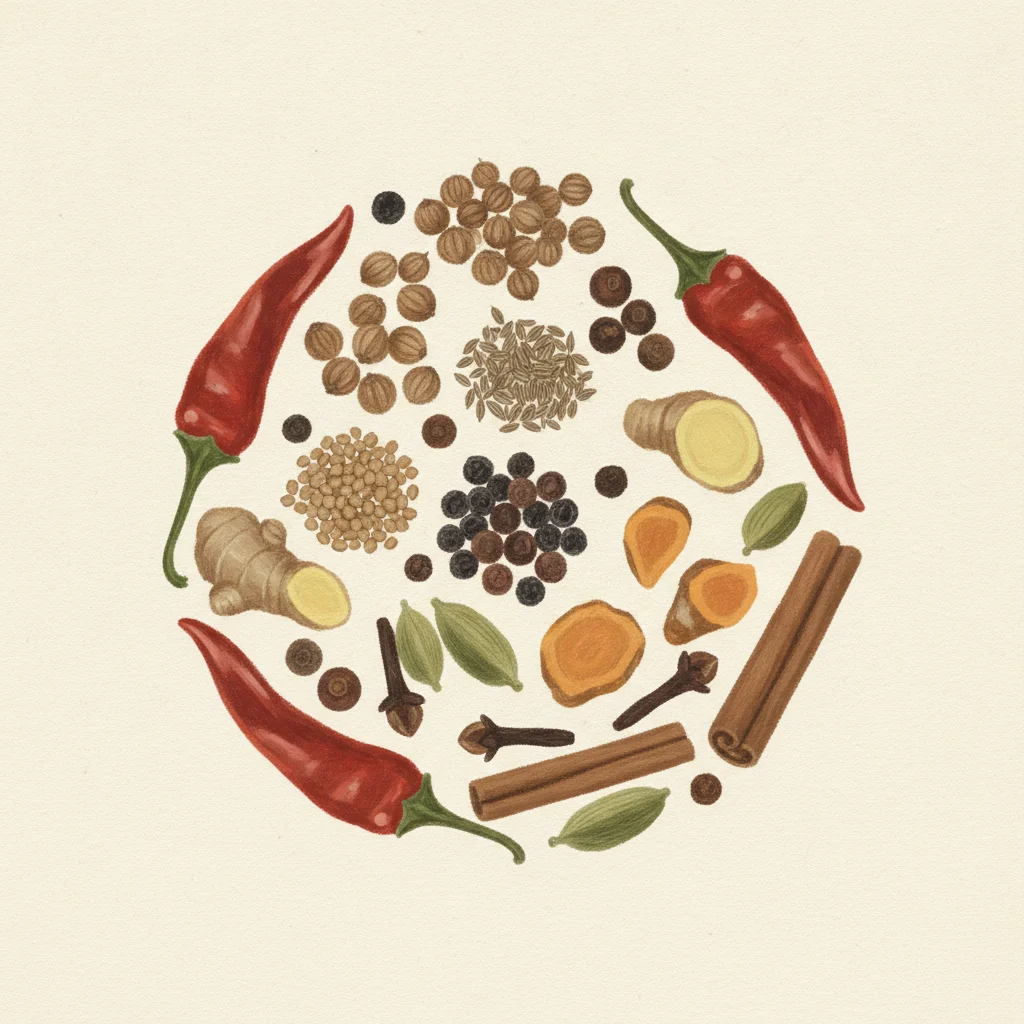
Berbere is the fiery, deeply aromatic spice blend at the heart of Ethiopian and Eritrean cooking. Built on dried chiles for heat, it layers in fenugreek, coriander, cardamom, clove, cinnamon, ginger, and allspice for warmth and complexity, ground into a brick-red powder. It is both the seasoning and the chile heat in dishes like doro wat, the national chicken stew, and it flavors lentils, beans, and meats. The fenugreek note is part of what makes it distinct. Recipes vary by region and household, and the best is freshly toasted and ground.
Which to use when
Cook with berbere. It goes in early, into the slow-cooked onions of a wat, and gives stews like doro wat their deep, layered heat, with fenugreek, coriander, garlic and ginger cooking down alongside the chile. Finish with mitmita. It is made from hotter bird's eye chiles with little more than Ethiopian cardamom, clove and salt, so it is heat first and spice second: it seasons kitfo, the minced raw beef dish, and sits on the table as a powder to dip torn injera into. They share a color, not a role. Swap one for the other at the same amount and you will get it wrong in both directions.
Out of mitmita? Substitutes
No substitute is exact. These are the closest by flavor behavior, with the ratio to start from and how the result will differ.
| Use instead | Ratio | How it differs |
|---|---|---|
| cayenne with a pinch of cardamom and clove | to taste | matches the heat and warmth, simpler than the original |
Out of berbere? Substitutes
No substitute is exact. These are the closest by flavor behavior, with the ratio to start from and how the result will differ.
| Use instead | Ratio | How it differs |
|---|---|---|
| paprika and cayenne with warm spices and fenugreek | to taste | covers heat and warmth, the fenugreek note is hard to fake |
Common questions
- What is the difference between mitmita and berbere?
- Mitmita is a simple, very hot powder of bird's eye chiles, Ethiopian cardamom (korarima), clove and salt, used to finish and season dishes. Berbere is a longer blend that adds coriander, garlic, ginger, fenugreek and other spices to the chile, and it is cooked into stews. Mitmita is about heat; berbere is about depth.
- Which is hotter, mitmita or berbere?
- Mitmita. It is made from hotter chiles than the ones used in berbere, and it carries fewer other spices to soften them, so a pinch goes a long way.
- Can I use berbere instead of mitmita?
- In a pinch, but expect a different dish. Berbere brings less heat and more warm spice, so kitfo or a dipping powder made with it will taste rounder and milder. Going the other way is riskier: mitmita in place of berbere adds far more fire and misses the fenugreek depth a wat depends on, so use much less.
- What is mitmita used for?
- It seasons kitfo, Ethiopian minced raw beef, and can be sprinkled on ful medames. It is also served as a table condiment: you spoon a little onto injera and dip morsels into it.
Newsletter
Something new in the cabinet
Every so often: a new spice, a swap that works, or a trick worth stealing. No spam.