Horseradish vs wasabi
Both deliver a sharp, sinus-clearing heat rather than a tongue burn, and most wasabi sold outside Japan is actually horseradish in disguise.
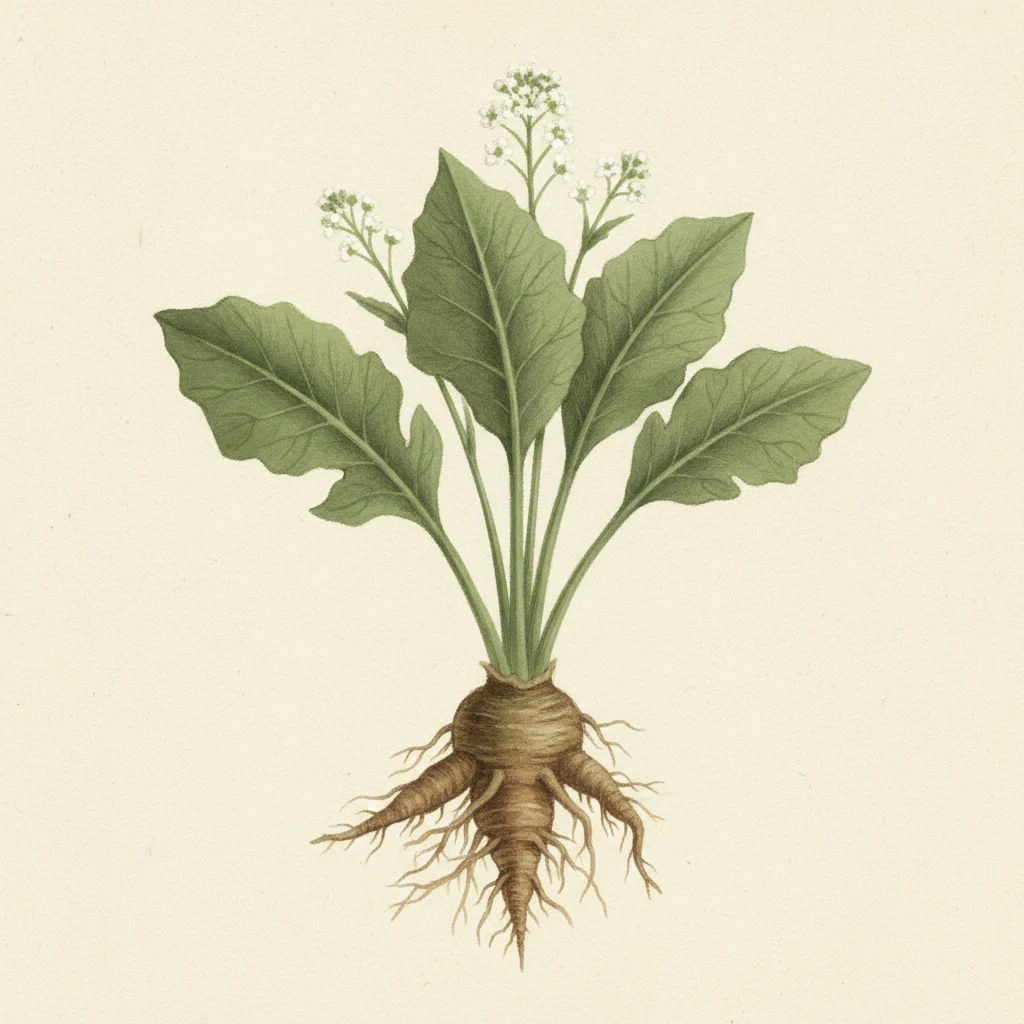
Horseradish
Sharp, hot, nasal, pungent
Horseradish is the pungent root of Armoracia rusticana, a hardy plant in the cabbage family, with a sharp, nasal heat that hits the sinuses rather than the tongue. Like mustard, its bite only develops when the root is grated and its cells are broken, releasing the volatile compounds, and that heat fades quickly unless fixed with vinegar. It is the classic accompaniment to roast beef and an ingredient in cocktail sauce and many European dishes. Most jarred wasabi is actually dyed horseradish, since true wasabi is rare and costly. Fresh-grated horseradish is far fiercer than the jarred kind.

Wasabi
Sharp, nasal, fresh, fleeting heat
Wasabi is the rhizome of Eutrema japonicum, a plant that grows in cold mountain stream beds in Japan, with a sharp, clean, nasal heat much like horseradish but greener and more fragrant. Its defining trait is how quickly it fades: freshly grated wasabi loses its punch within minutes, which is why it is grated to order. True wasabi is difficult to grow and expensive, so most of what is sold as wasabi paste or powder outside Japan is dyed horseradish with mustard. It is the classic partner to sushi and sashimi and seasons noodles and dressings.
Which to use when
Use horseradish for roast beef, cocktail sauce, and European dishes; it is cheap, widely available, and fierce. Use real wasabi, when you can get it, for sushi and sashimi, where its greener, fresher, more fragrant heat shines. In practice they swap one for one, which is exactly why dyed horseradish is sold as wasabi.
Out of horseradish? Substitutes
No substitute is exact. These are the closest by flavor behavior, with the ratio to start from and how the result will differ.
| Use instead | Ratio | How it differs |
|---|---|---|
| Wasabi | use less | similar nasal heat, greener and grassier |
| hot mustard | to taste | shares the nose heat with a different flavor |
Out of wasabi? Substitutes
No substitute is exact. These are the closest by flavor behavior, with the ratio to start from and how the result will differ.
| Use instead | Ratio | How it differs |
|---|---|---|
| Horseradish | use a bit more | the same nasal heat, less green and fresh; this is what most fake wasabi is |
Common questions
- Is wasabi just green horseradish?
- Most wasabi sold outside Japan is dyed horseradish with mustard, since real wasabi is rare and costly. True wasabi is a different plant, greener and more fragrant.
- Can I substitute horseradish for wasabi?
- Yes, about one for one. The nasal heat is very similar. That substitution is so common it is what most tube and packet wasabi actually is.
Where to buy
- Oregon Coast Wasabi
Grows real wasabi (Eutrema japonicum) on a commercial farm on the Oregon coast and ships fresh rhizome on ice, along with wasabi greens, freeze-dried powder, and plant starts for growing your own.
Merchants we think are worth buying from. We take nothing for these listings.
Newsletter
Something new in the cabinet
Every so often: a new spice, a swap that works, or a trick worth stealing. No spam.